

Throughout Melbourne's north and east, domestic drain cleaning and sewer repairs have changed massively over the years.
Particularly across high-density areas and older suburbs where properties have been renovated, extended, paved, landscaped and built over repeatedly during the last 10–15 years.
One thing most people don’t think about during renovations is: “How will somebody access the sewer system one day if there’s a blockage?”
Until the day the sewer blocks:
- Your shower starts overflowing with sewage.
- The toilets stop flushing.
- The dishwasher throws error codes.
- The kitchen sink starts gurgling.
- The washing machine won’t drain.
At that point your home’s entire sewer discharge system essentially comes to a grinding halt. And suddenly, access to the sewer becomes the most important thing happening that day.
What Is A Boundary Trap / Boundary Shaft?
Commonly, sewer blockages are found within the property’s boundary trap or boundary shaft. Essentially, it works similarly to a trap under your kitchen sink, except it serves the entire property's sewer system.
These older boundary traps were installed throughout many Melbourne suburbs years ago and in a lot of cases are now:
- deteriorated,
- collapsing,
- root infested,
- buried,
- paved over,
- concreted over,
- or extremely difficult to access.
We regularly attend properties where:
- sheds have been built over them,
- retaining walls installed on top,
- landscaping buried them,
- or extensions have completely restricted machinery access.
Nobody thinks about it at the time, but when the sewer blocks it becomes a major issue very quickly.
The Importance Of An Overflow Relief Gully
One of the most important things a property should have is an overflow relief gully (ORG).
An ORG is an external opening connected to the sewer system designed to overflow outside the home if a blockage occurs.
Its purpose is simple: to prevent sewage flooding internally through showers and lower fixtures inside the house.
Without a functioning overflow relief gully, sewer blockages can become far more serious and damaging internally.
Surprisingly, many homeowners don’t even know whether their property has one.
Replacing Boundary Traps Has Become More Difficult
Years ago, replacing a boundary trap was often relatively straightforward because there was open access to the front of the property.
Today that’s rarely the case.
Modern landscaping, tight access pathways, retaining walls, expensive paving, synthetic turf and renovations now make excavation significantly more complicated.
Traditionally, boundary trap replacement involves:
- excavating to the sewer connection point,
- removing the defective trap,
- installing a new inspection shaft,
- reconnecting drainage lines,
- and reinstating vents and junctions as required.
In tighter access situations, we now regularly use hydro excavation (non-destructive digging).
What Is Hydro Excavation?
Hydro excavation uses:
- high-pressure water jetting,
- combined with a large industrial vacuum system,
- to safely remove soil and expose underground services.
Essentially, it allows us to excavate with precision without requiring a large excavator in difficult access areas.
We often use hydro excavation:
- in tight access properties,
- around services,
- in contaminated ground,
- or when the boundary trap is completely blocked and traditional excavation becomes difficult.
Prevention Is Better Than Emergency Repairs
One of the biggest mistakes people make is waiting until they have sewage overflowing before thinking about their sewer system.
A simple CCTV drain inspection can often identify:
- tree root intrusion,
- deteriorating pipework,
- restricted boundary traps,
- collapsed sections,
- poor access points,
- or early signs of future problems.
In many cases, identifying these issues early can prevent a full emergency sewer situation later.
About W.L. Chivers Plumbing
At W.L. Chivers Plumbing, we specialise in complicated domestic sewer and drain repairs throughout Melbourne’s northern and eastern suburbs.
Boundary traps, tight access sewer excavations, blocked drains and diagnostic drainage work are a major part of what we do every day.
Being based in Heidelberg, we commonly work throughout:
- Ivanhoe,
- Thornbury,
- Preston,
- Northcote,
- Rosanna,
- Heidelberg,
- and surrounding areas where deep and difficult sewer systems are extremely common.
We’re always happy to have a conversation with homeowners about concerns surrounding their sewer system, previous blockages or access issues before they become a major emergency.
Jordan Chivers – Director, W.L. Chivers Plumbing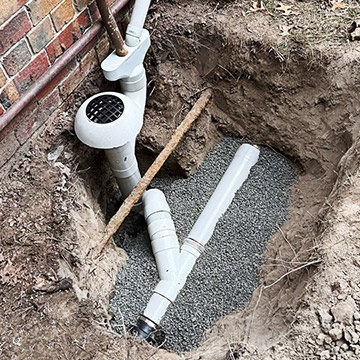
Accessing the sewerage drain
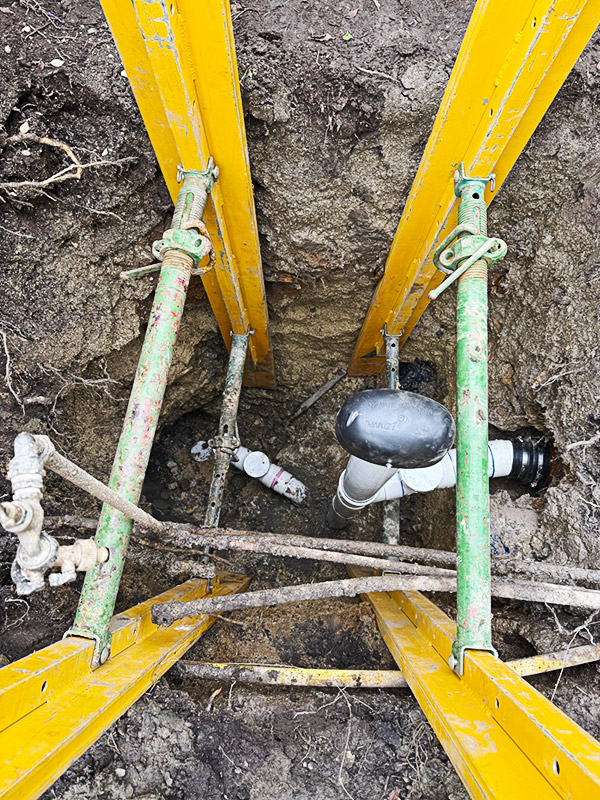
Sewer blockages are often within the property’s boundary trap
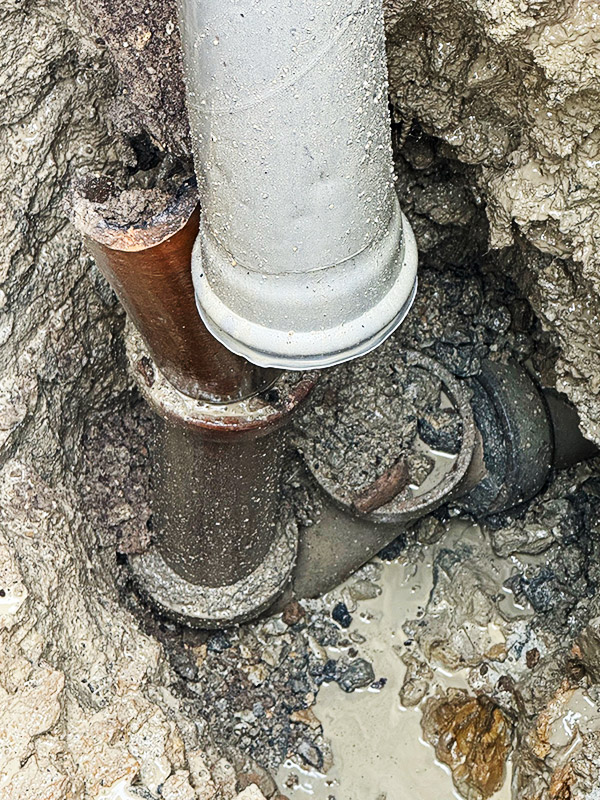
Sewer line repairs
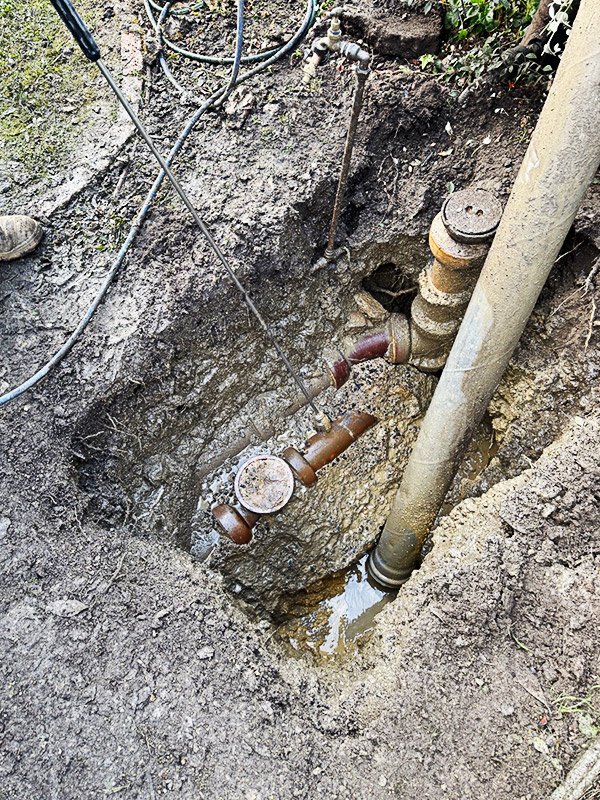
Ensure adequate access to your sewer drain is maintained